The sacred Olympic flame lighting, usually held at the 2,600-year-old Temple of Hera in Greece, has been moved indoors due to persistent rain.
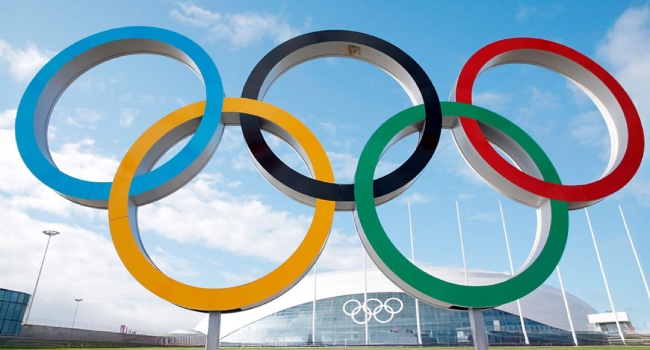
Organisers of the 2026 Milan-Cortina Winter Olympics have announced a last-minute change to the sacred flame lighting ceremony in ancient Olympia, Greece, due to persistent rainfall.
“The change of venue was necessary due to adverse weather conditions prevailing in Ancient Olympia and continuous rainfall, which made it impossible to hold the ceremony at the Ancient Stadium,” the Hellenic Olympic Committee said in a statement on Tuesday.
The dress rehearsal for the event went smoothly at the Archaeological Museum of Ancient Olympia. The flame had been successfully lit outdoors during a sunny rehearsal on Monday and will now be used in Wednesday’s official ceremony.
The 2026 Winter Games, set for February 6-22, will take place in Italy for the third time and for the first time in western Europe since Turin 2006. Normally, the ceremony is held at the 2,600-year-old Temple of Hera, near the site where the first Olympics were held in 776 BC. Rain prevented the sun from lighting the parabolic mirror used by performers dressed as ancient priestesses.
This year’s ceremony will be attended by IOC President Kirsty Coventry, marking her first Olympic flame ritual as head of the organisation. Greece’s rowing bronze medallist at the 2024 Paris Games, Petros Gaidatzis, has been chosen as the first torchbearer to begin the Greek leg of the relay.
Originally, Greek-American alpine ski racer AJ Ginnis was set to open the relay but was sidelined due to a training injury. Former Italian cross-country champion Stefania Belmondo and luge legend Armin Zoeggeler will be among the first torchbearers.
After a handover ceremony at Athens’ Panathenaic Stadium on December 4, the flame will travel to Rome, beginning a 63-day, 12,000-kilometre relay across Italy, including stops at major cities and the archaeological site of Pompeii.
The Winter Paralympics will follow from March 6-15, with ice sports in Milan, alpine skiing in Bormio and Cortina, biathlon in Anterselva, Nordic skiing in Val di Fiemme, and freestyle/snowboarding in Livigno.
Organisers are also preparing artificial snow as a precaution, with plans to produce 2.4 million cubic metres using 948,000 cubic metres of water. Italy remains Europe’s top user of artificial snow, covering over 90 percent of its ski slopes. Recent studies show snow cover in the Italian Alps has halved in the past century.